
Vuelta España Femenina 2026 – Prediction & Analysis
The 2026 edition is shaping up to be the toughest Vuelta Femenina ever. With more than 14,500 metres of climbing, two mythical summit finishes, and a start list packed with world‑class climbers, we are heading toward a spectacular battle for La Roja.
Route in numbers
✅ Sunday 3 May to Saturday 9 May
✅ 12th edition
✅ Total distance: 819.5 km
✅ Longest stage: Stage 7 – 132.9 km (Pola de Laviana → Alto de l’Angliru)
✅ Highest climb: Alto de l’Angliru – 1,570 metres (12.4 km at 9.7%,)
✅ 7 stages
✅ 0 rest days
✅ 0 time trials (no TTT or ITT in 2026)
✅ 2 flat stages (Stages 3 & 5)
✅ 3 hilly stages (Stages 1, 2 & 4)
✅ 2 mountain stages (Stages 6 & 7)
✅ Total elevation gain: >14,500 m
From 3 to 9 May, the peloton will race through Galicia, León and Asturias, with the grand finale on the debut ascent of the Alto de l’Angliru — a monster climb that will inevitably decide the race.
In this blog, we guide you through the stages, the key dynamics, and our prediction for the final general classification.
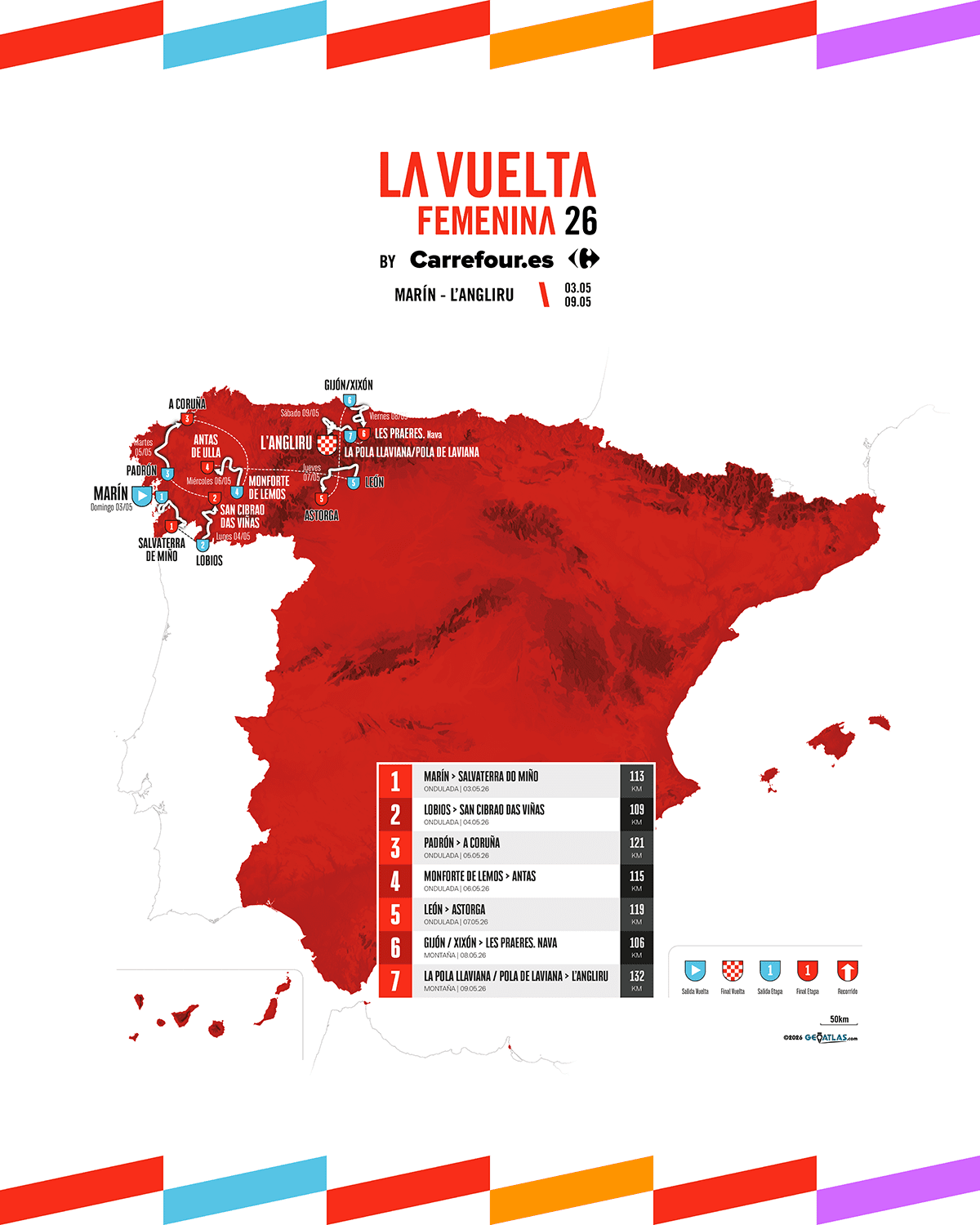
Map of the route
Sunday 3 May – Stage 1: Marín → Salvaterra de Miño (113.9 km)
The opening stage in Galicia immediately delivers a day filled with short, steep climbs and narrow roads. The profile is constantly rolling and demands full focus from kilometre zero. The finale rises gently, making both a compact group finish or a late attack realistic outcomes. A typically tense Vuelta start.
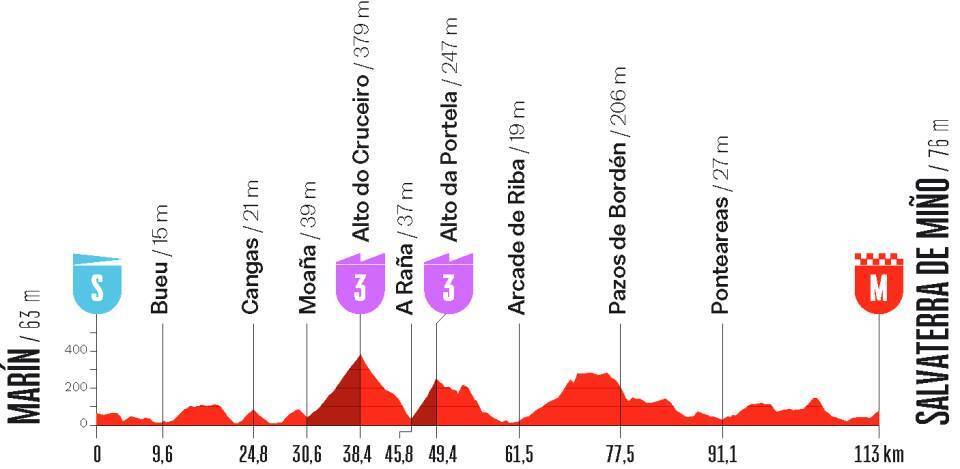
Profile of stage 1
Monday 4 May – Stage 2: Lobios → San Cibrao das Viñas (109.8 km)
No categorised climbs, yet not a single flat metre in sight. The route rises and falls all day, with plenty of corners and constant changes in rhythm. This is the kind of stage where teams can make a real impact by keeping the pace high. A sprint from a reduced peloton is the most likely outcome.
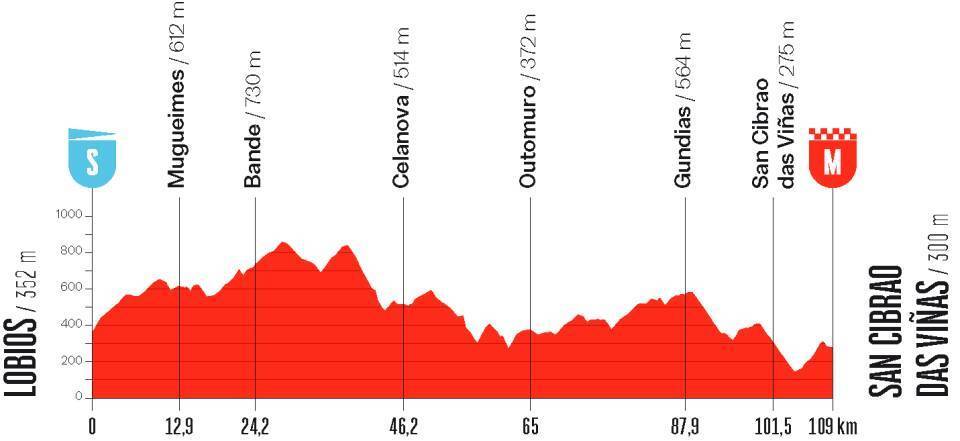
Profile of stage 2
Tuesday 5 May – Stage 3: Padrón → A Coruña (121.2 km)
The first genuine opportunity for the sprinters. The route heads toward the coast, and the finale in A Coruña can be treacherous if crosswinds pick up. The final kilometres are straightforward, but positioning will be absolutely decisive. A classic sprinters’ stage, unless the wind disrupts the script.
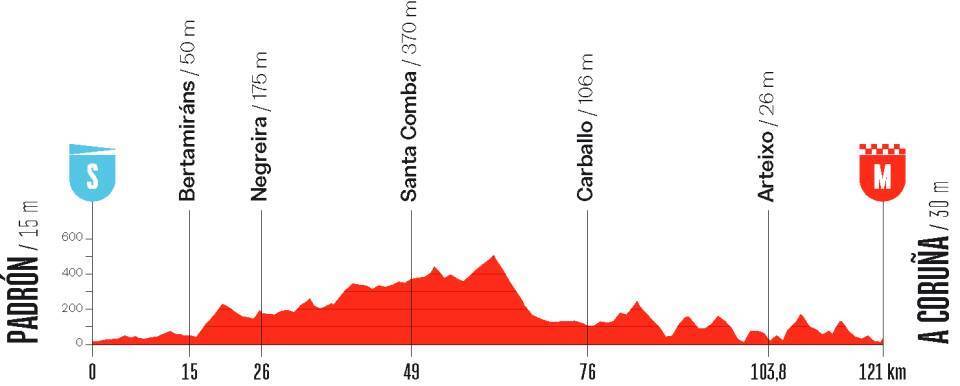
Profile of stage 3
Wednesday 6 May – Stage 4: Monforte de Lemos → Antas de Ulla (115.6 km)
The final day in Galicia brings another demanding hilly stage. Two categorised climbs and a maze of narrow, twisting roads make this an ideal day for attackers. By now, the peloton will already be showing signs of fatigue. A compact group of around 20–40 riders reaching the finish together is the most likely scenario.
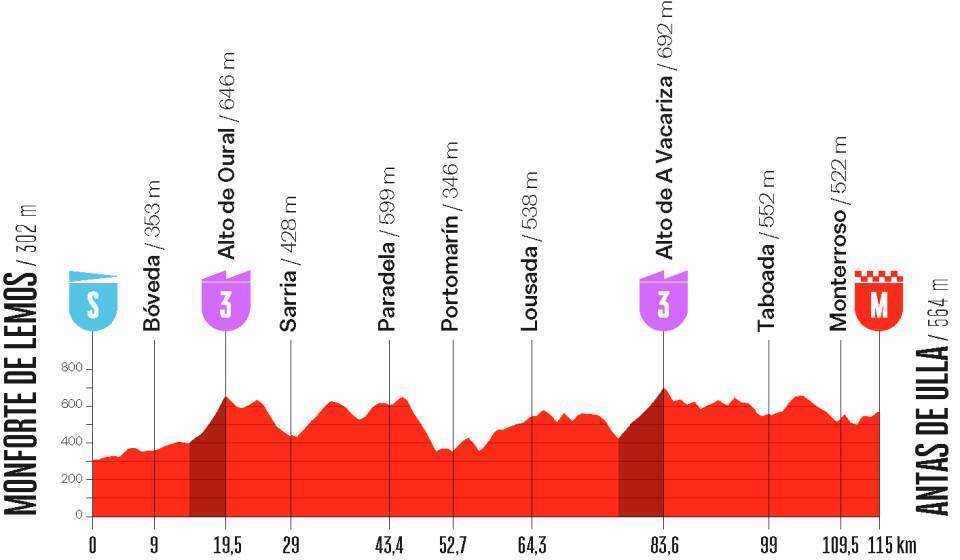
Profile of stage 4
Thursday 7 May – Stage 5: León → Astorga (119.6 km)
The flattest stage of the week. The long, straight roads between León and Astorga make this a clear opportunity for the sprinters, although the region is notoriously exposed to wind. If echelons form, the general classification could be shaken up even before the mountains arrive. No wind means a straightforward bunch sprint. Wind means chaos.
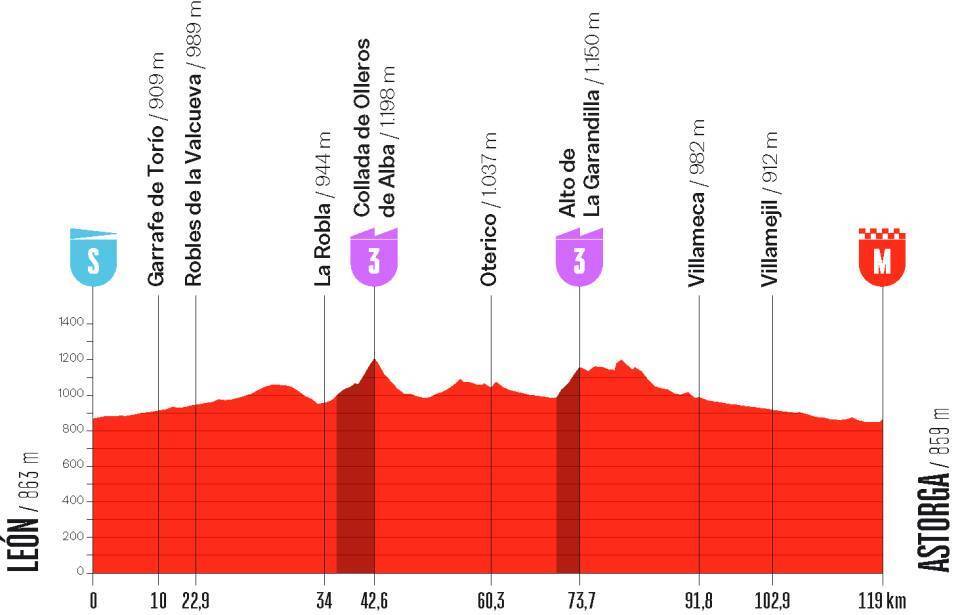
Profile of stage 5
Friday 8 May – Stage 6: Gijón → Les Praeres (106.5 km)
The first major mountain stage of the race. The final climb to Les Praeres is short but brutally steep, featuring multiple ramps well above 15%. The run‑in is relatively calm, but the finale is explosive and highly selective. This is where the first real gaps between the general‑classification contenders will appear. Any time lost here will be difficult to recover later in the race.
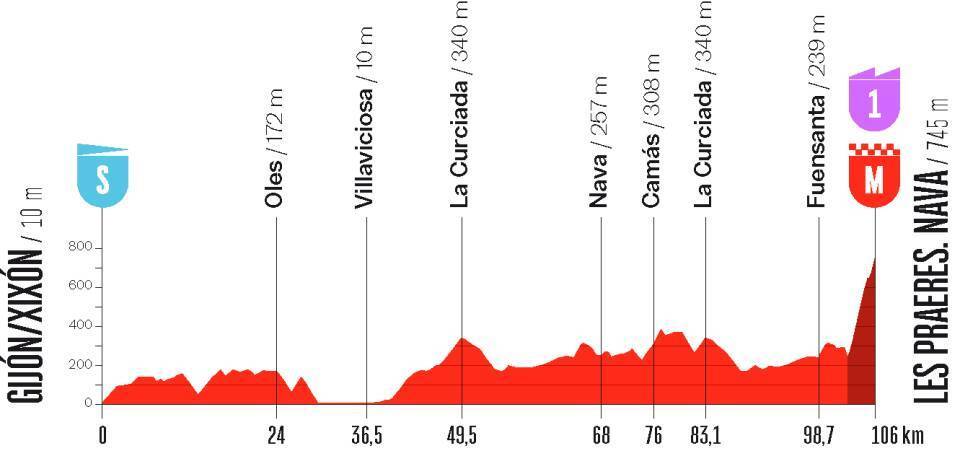
Profile of stage 6
Saturday 9 May – Stage 7: Pola de Laviana → Alto de l’Angliru (132.9 km)
The queen stage and the longest day of the race. After three categorised climbs, the riders face the mythical Alto de l’Angliru — a 12.4 km monster at nearly 10% average, with infamous ramps exceeding 20%. This climb offers no mercy. The winner of the 2026 Vuelta will be decided here.
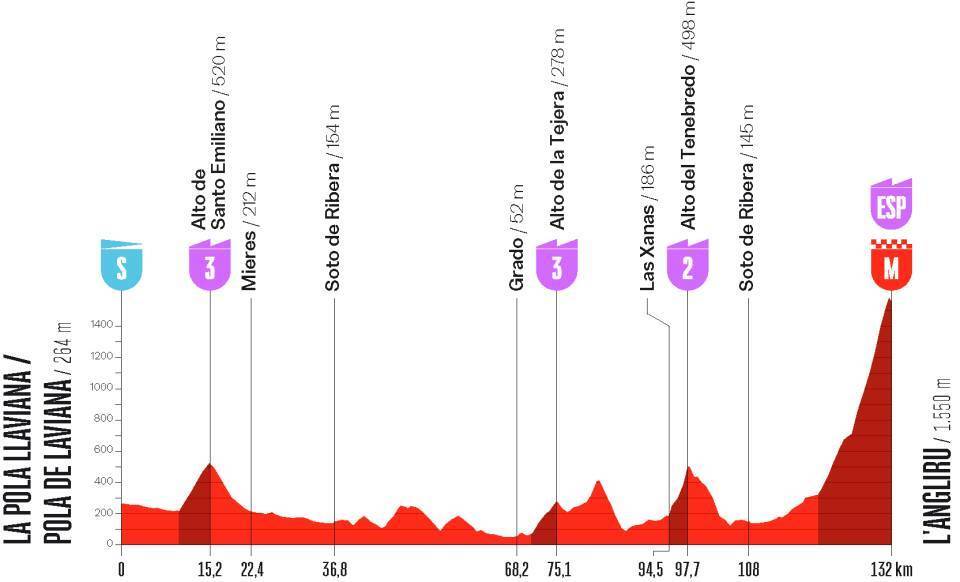
Profile of stage 7
Voorspelling - Algemeen klassement
De voorspelling van de 💻, Expected Win (xW):
|
Name
|
Team
|
Win %
|
|---|
🦄 Katarzyna Niewiadoma-Phinney
*The unicorn is our joker, nice old-fashioned based on feeling